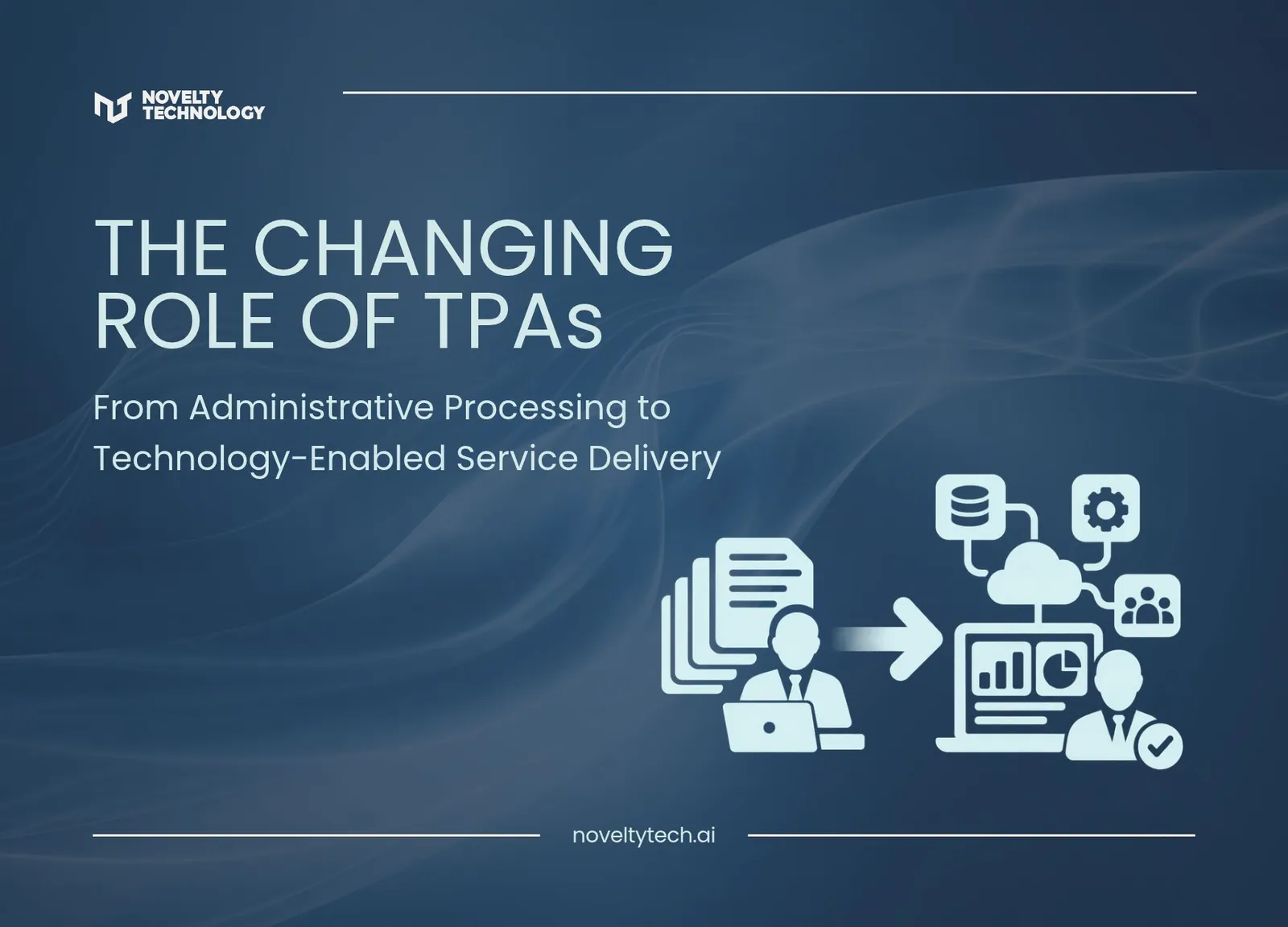
For years, most of the value a third-party administrator delivered came down to one thing: can you manage complex, high-volume operational work without dropping the ball? Process transactions accurately. Maintain records. Coordinate across systems. Resolve exceptions. Keep things moving so clients can focus on their actual business.
Those responsibilities aren’t going away. But I’d be lying if I said the economics around them look the same as they did even a couple of years ago.
Automation is eating into routine work that used to require real staff hours, and a good chunk of what used to be measured in headcount is now something software can support, accelerate, or, under the right conditions, handle outright. That leaves TPAs facing a question I don’t think enough of them are asking out loud.
"If technology can do much of the administrative work, where does a client’s value in choosing you come from?"
When Software Starts Delivering the Service
Sequoia Capital published a piece in March 2026, Services: The New Software, that gets at something I’ve been thinking about for a while. Software companies used to sell tools that helped professionals do their jobs. Service companies sold the labor and expertise behind the finished outcome.
I’d argue it goes further than claims. Most TPA workflows—such as processing information, applying rules, coordinating across systems, handling predictable requests, and others—are exactly the kind of work where software changes the cost, speed, and consistency of what gets delivered. That puts pressure on established TPAs to reimagine services and their delivery and build the products that create competitive advantage and platforms for growth.
Capacity Isn’t the Advantage Anymore
Growing capacity used to mean hiring, tightening procedures, or bolting software onto a team to help them push more volume. Automation disrupts that model, allowing organizations to take on more work without the same pressure to grow headcount.
But here’s the catch: processing capacity by itself doesn’t hold up as a differentiator for long. Once every provider has access to similar automation, faster transaction turnaround becomes table stakes.
But that transition needs to be designed deliberately, with clear boundaries around what technology can handle independently, when validation is required, and when decisions need human involvement.
Meanwhile, monthly reports that once required multiple teams and provided only a snapshot can become real-time views through modern client portals. Combined with traceability, clear escalation paths, and better operational visibility, these changes allow TPAs to take greater responsibility for service outcomes. This is how the conversation moves from “we process transactions” to “we own the outcome.”
A Processed Transaction Isn’t the Same as a Good Outcome
I see a gap all the time: a transaction handled correctly, but the experience around it is still frustrating. A case moves through five systems, and the client has no idea where it stands. An exception got resolved, but it took three follow-up emails to get results. The internal processing target gets hit while another team downstream is stuck doing reconciliation nobody budgeted for.
Closing that gap means connecting each step in a workflow to what the client expects to happen, which means better system coordination, automated status updates, consistent exception handling, and catching issues before they interrupt service. It also means measuring more than volume and speed.
None of This Works Without the Technology Foundation
To be clear—AI tools alone will not get a TPA here. Most of these organizations run on environments shaped by years of changing requirements, client-specific processes, legacy applications, and integrations across platforms that were never designed to talk to each other. That environment holds a lot of operational knowledge. It also comes with many constraints. A sharp new automation capability can perform beautifully in a demo and still deliver nothing if it can’t reach reliable data or safely interact with what’s already running.
That’s why modernization has to come first, connecting fragmented systems, cleaning up data consistency, documenting the logic that’s currently living in someone’s head, and redesigning the workflow itself. Sometimes that’s fixing an existing integration. Sometimes it’s a bigger architectural change. The goal is a foundation that enables continuously improving service, not a pile of disconnected capabilities that increase complexity.
The Real Competition
As processing gets more efficient across the board, I think the basis of competition shifts with it. Clients will keep expecting accuracy, reliability, compliance, and cost control. What separates TPAs going forward is transparency, responsiveness, and visible proof of getting better over time.
This doesn’t necessarily mean every TPA needs to become a software company. However, software is becoming part of how the service itself gets produced, and the service is the experience.
Trying to figure out where your own operational knowledge could become a real technology advantage instead of a cost center? Tell me what’s running your workflows today. I’d rather start there than with a platform pitch.
Source: Julien Bek, Services: The New Software, Sequoia Capital, March 5, 2026.