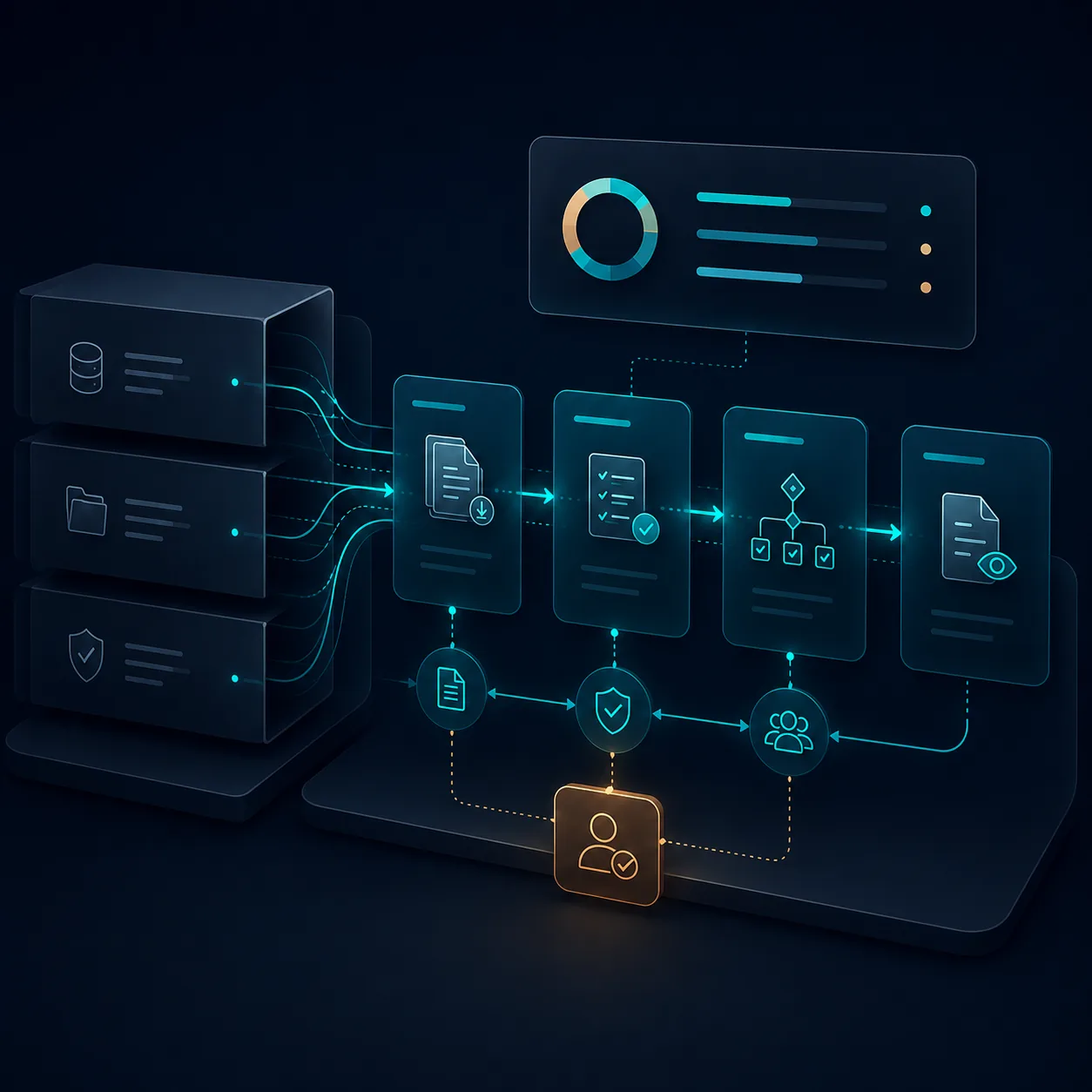
Modernize TPA workflows without disrupting core systems.
Novelty Technology helps TPA teams improve portals, document intake, claims-support operations, provider and member service, data movement and workflow visibility through focused software and human-controlled automation.
Modernize the work people experience every day.
TPA modernization usually begins with the work that teams, members, and providers experience every day. We focus on the points where fragmented systems, manual effort, and limited visibility create the most friction—and where a focused software intervention can make the operation easier to manage.
Improve member and provider portals
Give members and providers clearer self-service so fewer questions come back to your team by phone or email.
Reduce manual intake and document work
Cut down on manual keying from faxes, PDFs and inbound files by adding structured intake with human review.
Connect claims, admin systems and partners
Move data between core claims platforms, ancillary admin systems and outside partners with fewer custom point-to-point builds.
Improve queue and SLA visibility
Give operations leaders a clearer view of backlogs, ownership and SLA status across lines of business.
Give service teams better context
Bring member, provider and claim history into one place so service reps can answer questions without hopping between systems.
Use AI assistance with human review
Apply AI to classify, extract and summarize administrative work while qualified reviewers stay accountable for decisions.
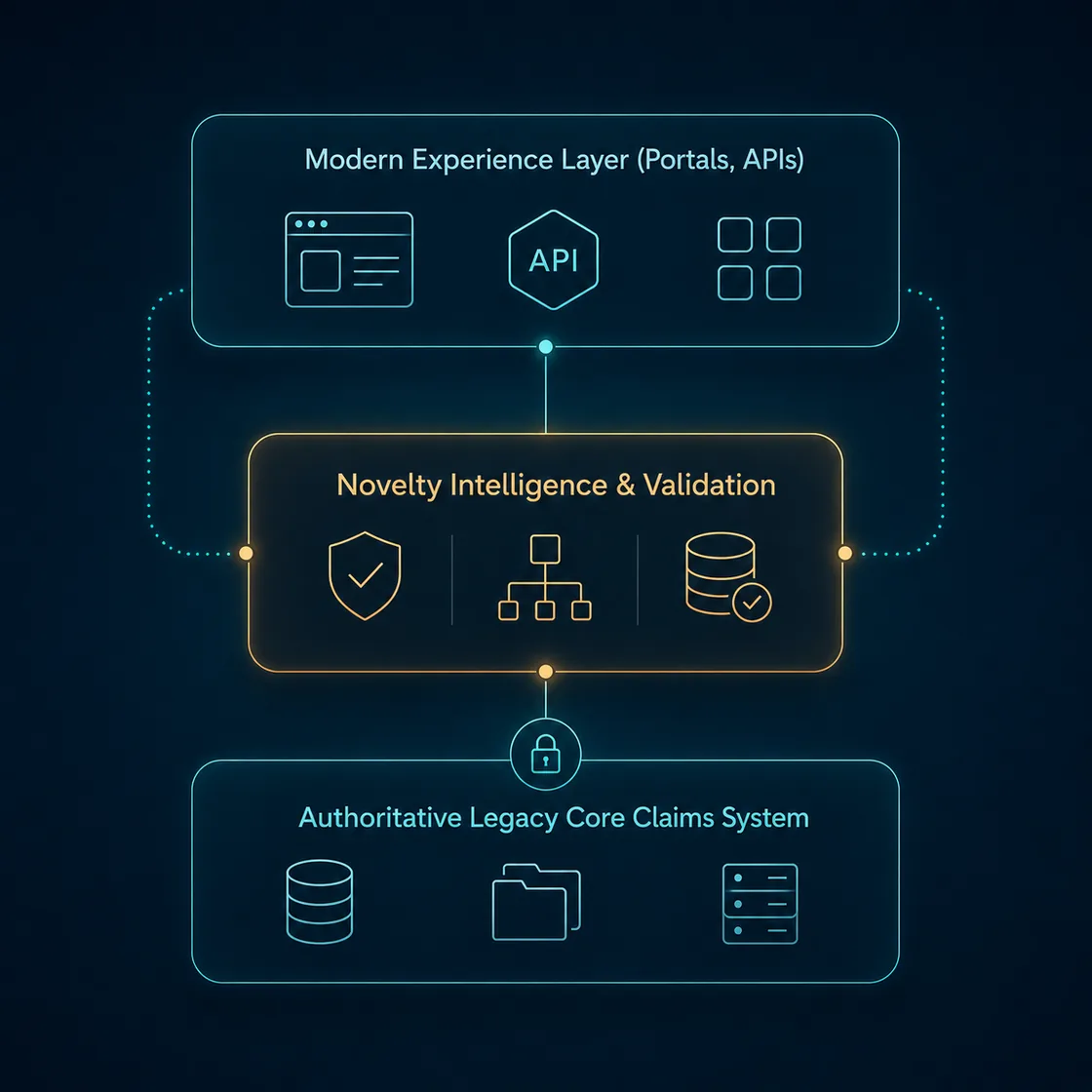
Create a modern working layer around systems already running the business.
New portals, services, APIs, queues, data pipelines and operator workspaces can improve access and flow while established claims and administrative platforms remain authoritative. The right boundary is mapped — not assumed.
- Decouple complex legacy architectures with lightweight API wrappers
- Establish a modern, controlled buffer layer around systems of record
- Progressive migration and validation approaches designed to reduce disruption
- Traceable changes with clear reviewer accountability at each step
Start where volume, manual effort and fragmented context intersect.
Not every workflow needs to change at once. The strongest starting points are often where high volume, repeated manual work, and scattered context create avoidable delay. We identify the areas with the clearest operational value and define a focused path forward.
- Intake
Document & Correspondence
Ingest unstructured mail, faxes or portal attachments instantly.
- Validate
Claims & Eligibility Check
Verify criteria against database records instantly with confidence scores.
- Resolve
Exception Desks
Human operators triage flagged exceptions with transparent context side-panels.
- Maintain
Provider Data Cleansing
Automate roster reconciliation, taxonomy matching and data hygiene.
- Observe
Queue & Workload Visibility
Backlog tracking, ownership and management dashboards that make workload legible.
- Integrate
Reconciliation & EDI Exchange
Secure writebacks and standards-compliant files pushed to partners.
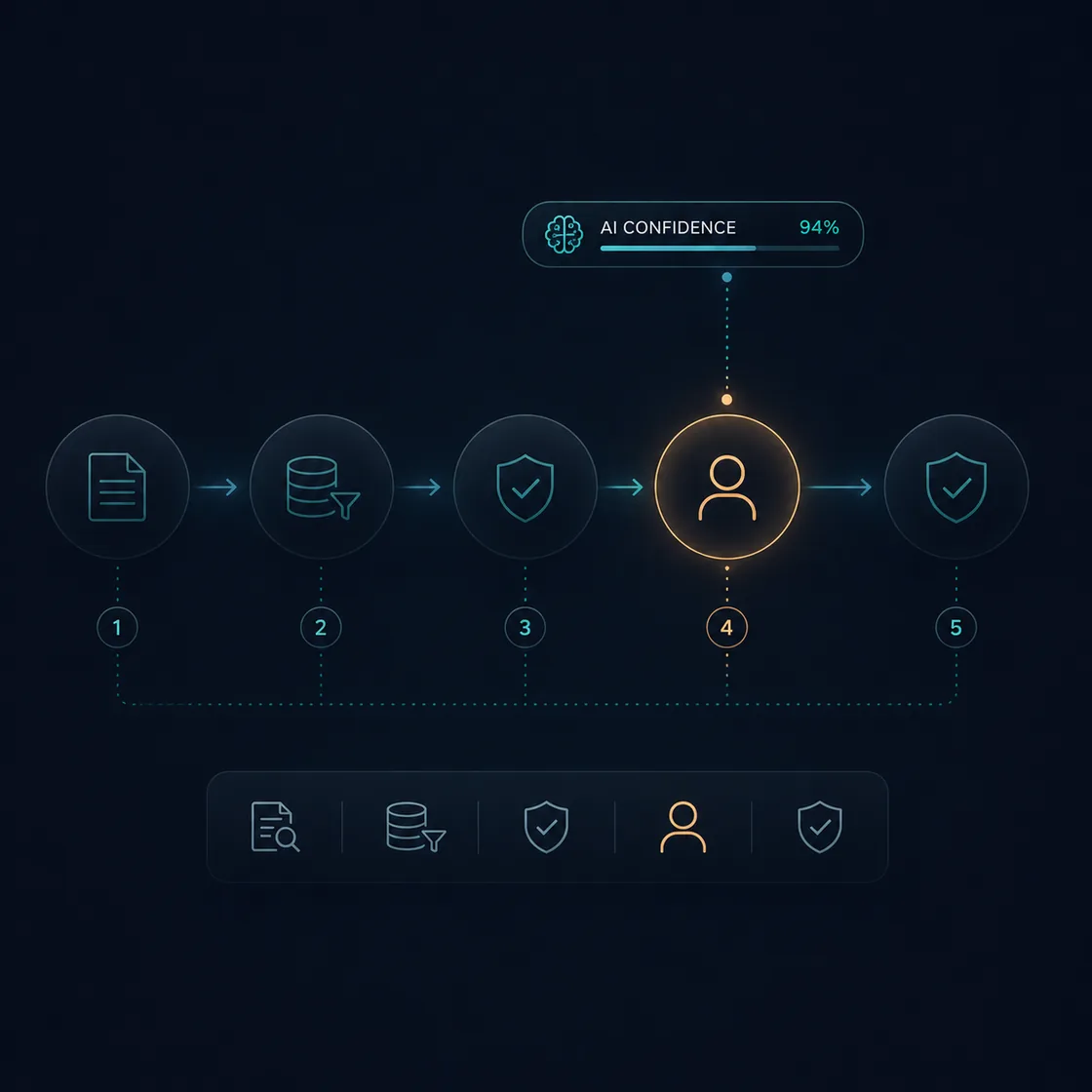
AI can prepare and recommend. Authorized people remain responsible for sensitive decisions.
A controlled workflow may classify inbound material, extract fields, validate information, summarize context, identify exceptions and draft next actions. Low-confidence or sensitive items move to a qualified reviewer with the original source visible.
- Source context stays visible throughout validation and review
- Confidence thresholds and validation rules are defined up front
- Human reviewers stay accountable for uncertain or sensitive work
- Approved decisions flow through controlled, access-managed integrations
- Reviewer edits, approvals and system calls are captured in an audit trail
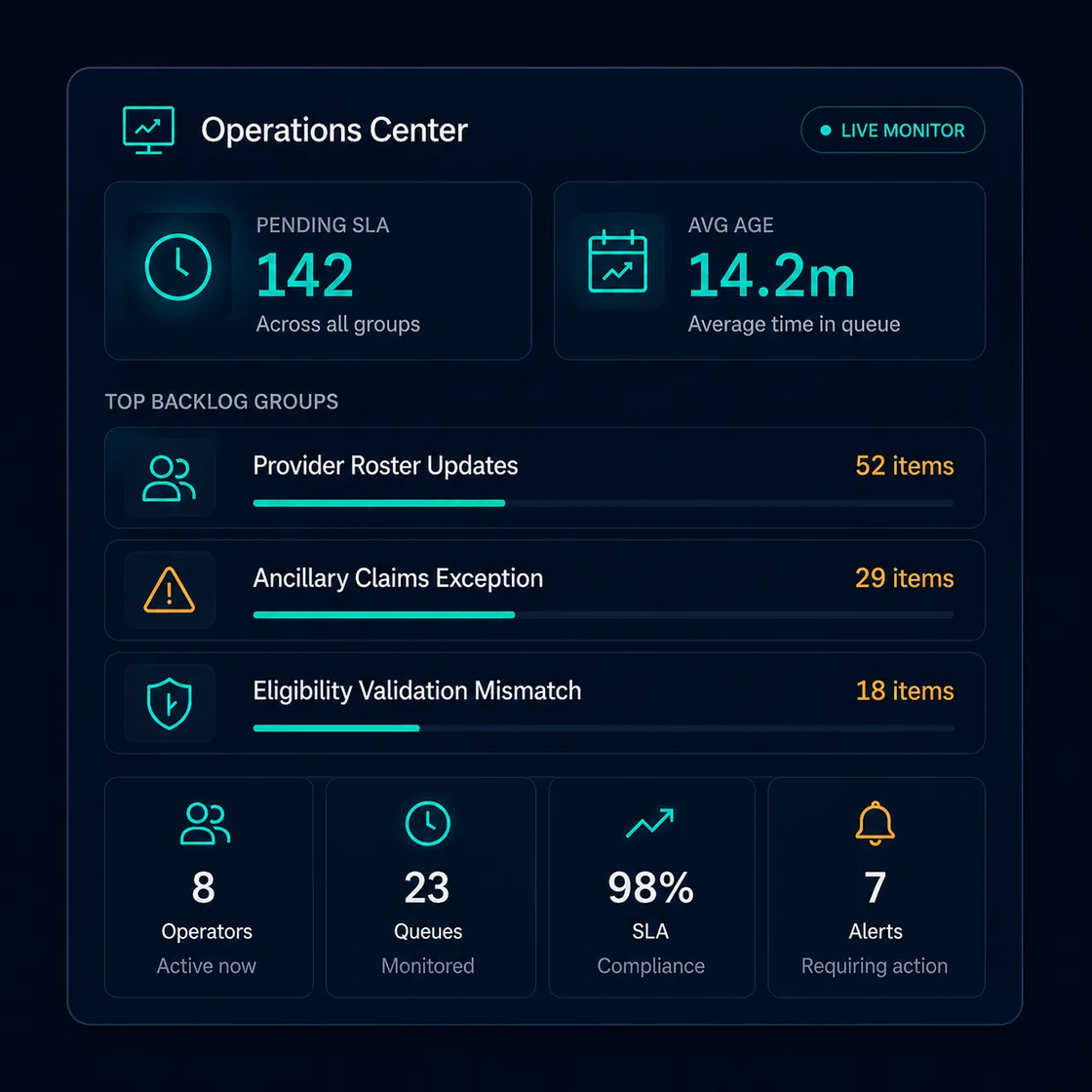
See what is waiting, why it is waiting, and who owns the next move.
Modern workspaces can group work by age, type, impact, owner and upstream cause — helping leaders distinguish temporary workload from recurring process or system problems.
- Queue and SLA visibility across all lines of business
- Exception categorization linked to raw root causes
- Granular operator ownership and automatic escalations
- Historical volume, seasonal loads and trend analysis
- Instant alerts for critical upstream file or process issues
- Clearer operational evidence indicating exactly what to optimize next
Modernization backed by HIPAA-aligned controls and an audited engineering practice.
Every TPA engagement runs against HIPAA controls and an audited engineering practice — so the workflows we change stay defensible to your compliance, security, and audit teams.