AI has changed the pace of software development. Teams can research ideas sooner, understand existing code faster, reduce repetitive work, and move from an initial concept to something tangible in less time.
For enterprise organizations, that creates a meaningful opportunity. It also raises an important question:
“How do you move faster without creating more risk, complexity, or rework?”
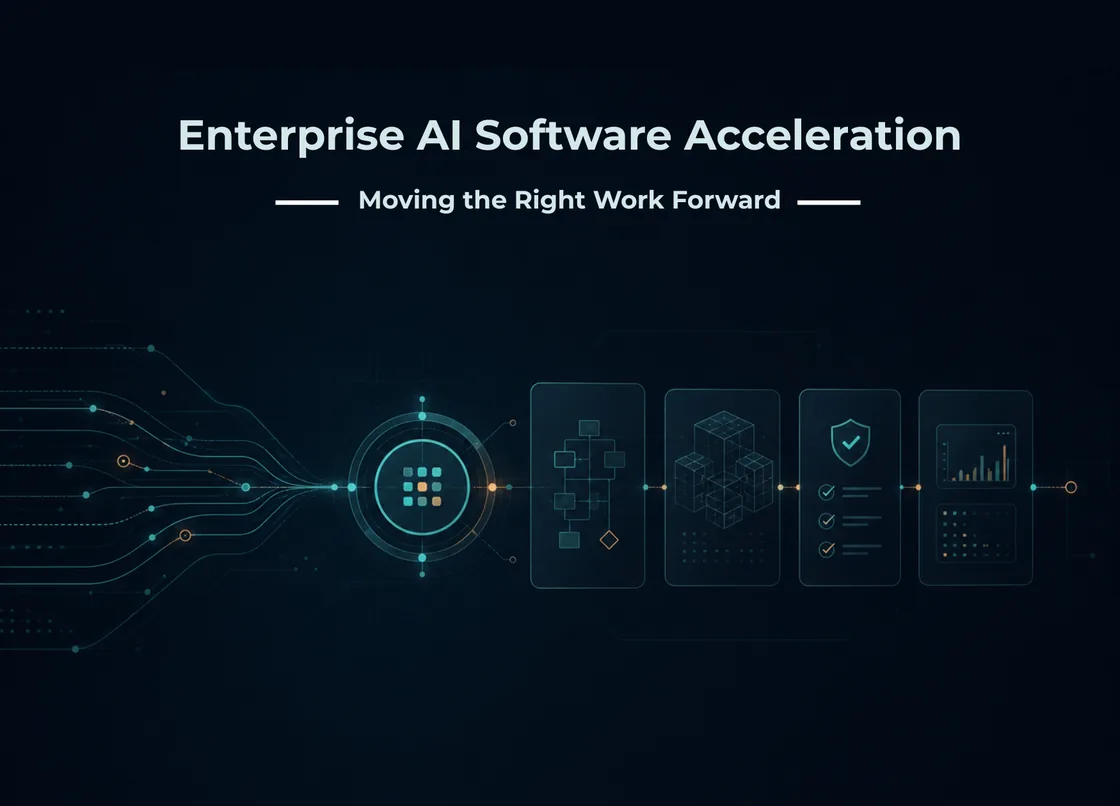
At Novelty Technology, Enterprise AI Software Acceleration is our approach to that challenge. It combines AI-enabled delivery with experienced engineering judgment to help organizations build, modernize, and improve software more efficiently.
The objective is not simply to produce more code. It is to apply AI where it creates useful leverage—and move the right work forward.
Faster Results Are Not Always Progress
AI can increase how much a software team produces. But production capacity is rarely the only thing holding an enterprise initiative back.
More often, progress slows because requirements are unclear, priorities compete, legacy dependencies remain hidden, systems do not align, security and access rules surface late, or ownership is uncertain.
A team may be able to build a feature quickly and still spend months resolving the decisions surrounding it.
This is why acceleration must begin before development. Teams need to understand the business pressure behind the request, how the proposed change fits the wider environment, and what should actually be built.
In some cases, the answer is a new product or capability. In others, it may be a focused integration, a redesigned workflow, the replacement of one unstable component, or better use of a dependable system already in place.
AI can help teams examine those options sooner. Experienced people still need to decide where to intervene. Sometimes the fastest responsible move is to build less.
Where AI Creates Leverage
AI does not create value simply by appearing everywhere. Its value comes from helping teams make better decisions and move through an accountable delivery process more effectively.
Enterprise AI Software Acceleration applies AI at five points in that process:
- Discover: synthesize information, map workflows, and clarify where the real pressure sits.
- Decide: explore technical options, document trade-offs, and put working evidence in front of stakeholders sooner.
- Deliver: reduce repetitive effort and help engineers move through known patterns more efficiently.
- Verify: expand test coverage, support review, and strengthen traceability across quality and security work.
- Operate: improve documentation, monitoring, and the continuity needed to support the system after launch.
These are not separate products bolted onto a project. They are points of leverage inside a single accountable process—used where they help, skipped where they do not.
What Responsible Acceleration Looks Like
Consider an organization that wants to add an AI assistant to a customer portal. The goal seems straightforward: answer common questions, reduce support demand, and help users complete routine tasks.
But the portal may depend on several systems. Customer information may be stored in different places. Documents may have different access rules. Some requests may be safe to automate, while others require review from a trained employee.
A feature-first approach might produce an impressive demonstration quickly. The assistant could answer sample questions and complete a few controlled tasks. But that would not prove that it is drawing from the right information, protecting sensitive data, respecting permissions, or escalating important requests correctly.
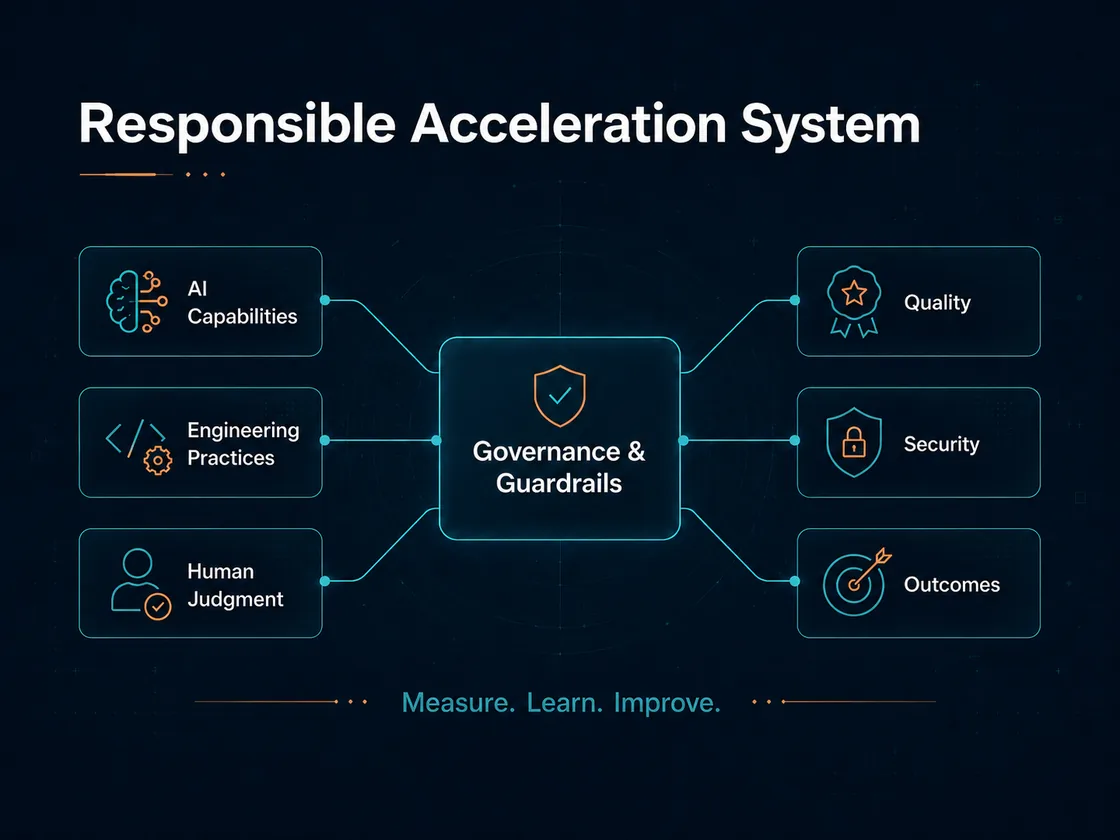
A stronger approach begins with the system around the feature.
The team maps the workflow, identifies trusted sources of information, defines access boundaries, and separates low-risk assistance from decisions that require human authority.
Only then does the AI component take shape. It may summarize approved information, retrieve relevant resources, or route requests to the right team. The existing systems may remain largely intact, supported by a focused integration or service layer.
The result is not simply a faster feature. It is a clearer path from an idea to something the organization can use responsibly.
At a smaller scale, the same principle holds true. For example, when a claims operations team uses AI to summarize case files for adjusters, the real challenge is not generating the summary itself. Its reliability depends on the underlying access controls, data governance, and accurate mapping to trusted source systems. Building the feature is relatively straightforward; ensuring the surrounding ecosystem supports it securely and accurately is where the real work lies.
Production Remains the Standard
“A prototype proves possibility. Production proves responsibility.”
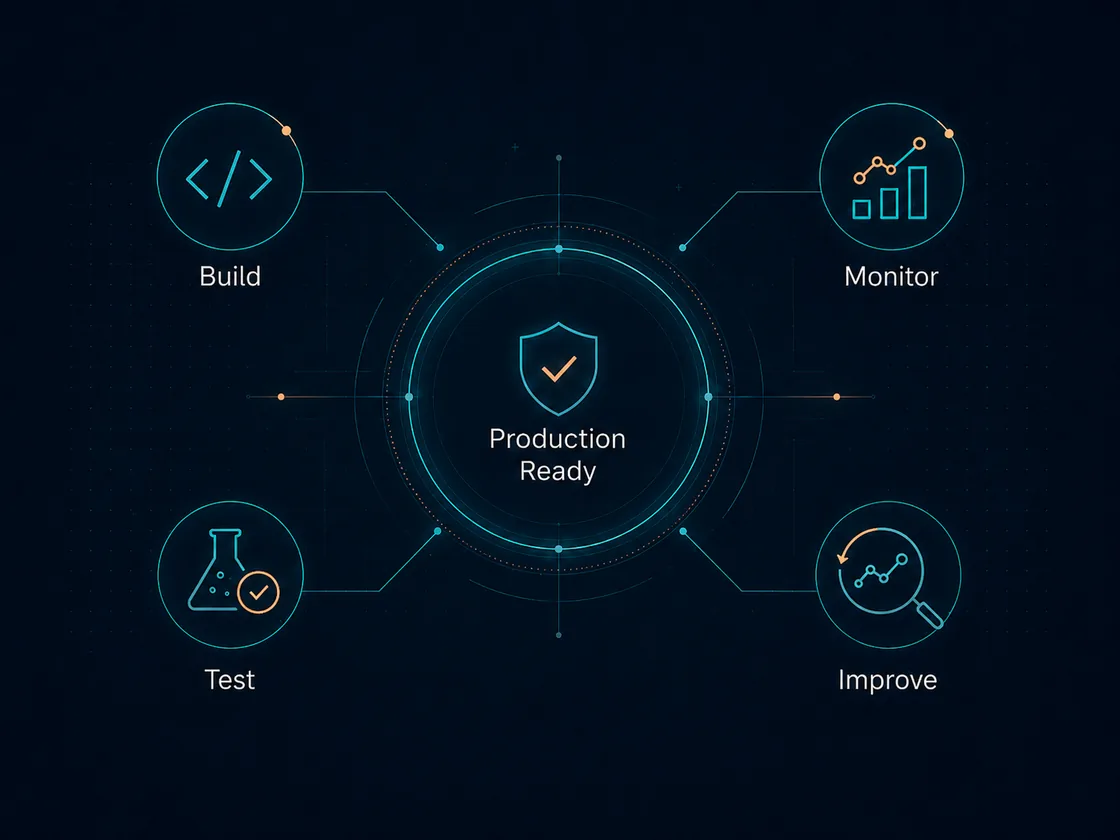
Enterprise software may support sensitive data, essential operations, multiple teams, external integrations, and users who rely on it to complete important work.
Those responsibilities do not disappear because something was built with AI.
Architecture still matters. Security still matters. Quality engineering still matters. Systems still need to be monitored, maintained, and improved after launch.
As software becomes easier to generate, these disciplines become more valuable—not less. They separate output that looks convincing from software an organization can confidently operate.
Moving the Right Work Forward
Novelty Technology did not begin with AI.
For more than 15 years, we have built and supported software shaped by real business needs, complex environments, and long-term responsibility.
AI expands what that experience allows us to do. It helps us investigate sooner, reduce repetitive effort, create working evidence faster, and make progress without treating speed as the only measure of success.
We do not believe every system needs to be replaced or every workflow needs AI. We believe organizations should use modern tools where they create practical value—and experienced judgment where the consequences matter.
That is the purpose of Enterprise AI Software Acceleration: to help organizations move important software initiatives forward with greater speed, clearer decisions, and the control required for production.