The rise of AI-assisted development has changed the economics of software creation. Teams can move from an idea to a working application in a fraction of the time it once took. Prototypes, internal tools, integrations, and production features can all take shape faster, with less implementation effort required to prove that something works.
That changes the constraint.
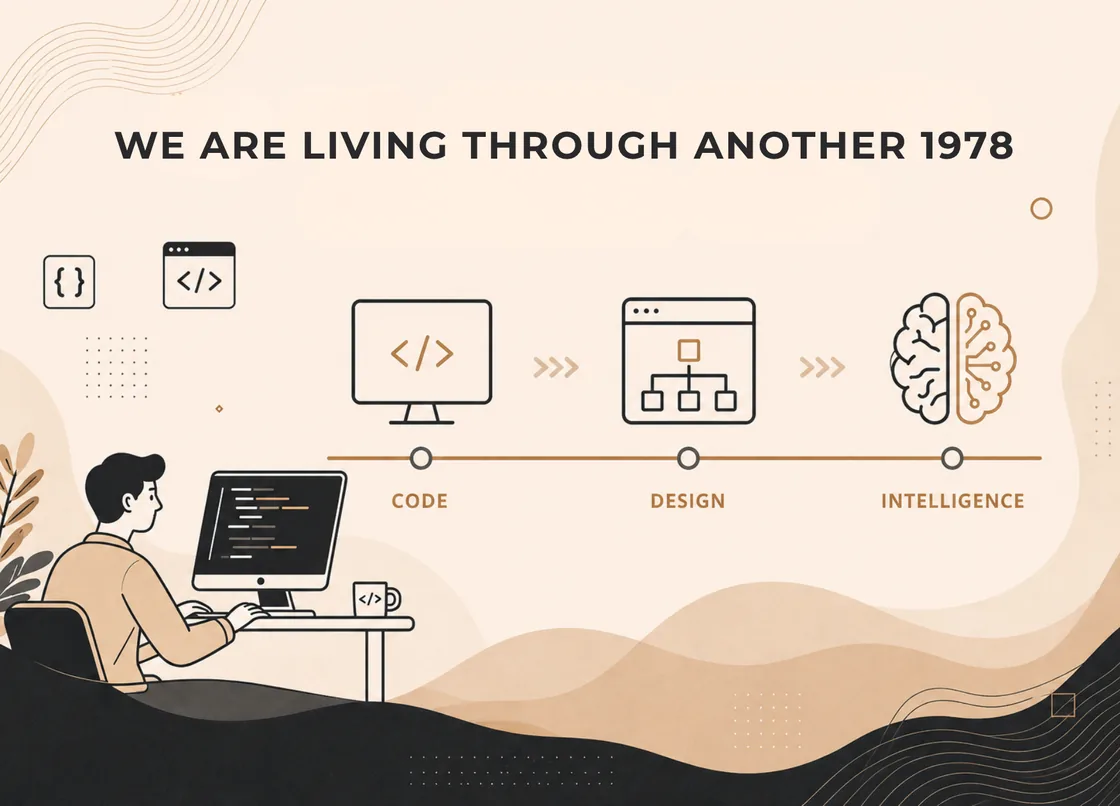
When code is expensive and slow to produce, much of the engineering challenge is getting software built at all. As code becomes cheaper and faster to generate, more of the value shifts to deciding what deserves to become production software, what can be trusted, what it should be allowed to touch, and who owns the consequences when it fails.
AI is making code less scarce. It is not making judgment, accountability, or production responsibility less scarce.
That is why engineering judgment becomes more valuable as implementation accelerates, not less.
The hard part moves upstream
AI can help teams produce software that looks finished surprisingly quickly. It can generate application logic, connect services, create interfaces, and help test whether a feature behaves as expected.
But functional correctness is only part of the production standard.
Once software interacts with customer workflows, enterprise systems, sensitive data, or operational processes, the important questions expand. What can the application access? How are permissions enforced? Which dependencies sit underneath it? What happens when a downstream system fails? Can actions be traced? How are changes tested and deployed? Who owns the application after launch?
These are not secondary questions added after the code is written. They determine whether the software belongs in production at all.
That distinction matters because AI compresses the distance between idea and working software. A prototype can become convincing before the surrounding engineering decisions have caught up.
Do not rebuild slow bureaucracy around fast development
The wrong response is to slow every AI-assisted project down with more meetings, manual approvals, and one-off reviews.
Teams should be able to explore ideas quickly. The ability to test a workflow, build a proof of concept, or validate an integration without committing months of development effort is one of the clearest benefits of AI-assisted engineering.
The problem appears when implementation accelerates while security, testing, architecture, and deployment remain slow and manual. Eventually those functions become the new bottleneck.
The answer is to make assurance faster too.
That means treating the path to production as an engineering system of its own. The more that security controls, testing, observability, identity, deployment, and ownership can be built into that path, the less every new application has to rediscover them from scratch.
Build guardrails into the environment
That can include reusable identity and access patterns instead of custom authentication, approved integration methods instead of rebuilding connections to core systems, automated dependency and secret checks within CI/CD, consistent testing before deployment, observability built in from the beginning, and clear ownership for every production application.
Some controls can be standardized and automated. Others require judgment.
That is an important boundary. Organizations should automate the checks that can be made repeatable, then preserve engineering attention for decisions that depend on context: architecture, risk, failure modes, data exposure, operational impact, and whether an experiment should become production software in the first place.
This is where the role of experienced engineers changes. When AI reduces the effort needed to write and assemble software, senior engineering value moves further toward framing the problem, choosing the right boundaries, recognizing hidden dependencies, deciding where controls belong, and knowing when a technically working solution should not ship.
The scarce capability is no longer just the ability to produce code. It is the ability to exercise judgment over an expanding volume of code and software decisions.
Leadership has to change with the constraint
This is not only an engineering team issue.
Technology leaders need to reconsider what they measure and where they invest. If teams are evaluated mainly on how quickly they produce working features, AI can make output look dramatically better while masking whether the organization is actually improving its ability to ship reliable software.
A better leadership question is whether the organization can increase software throughput without increasing production ambiguity.
That means knowing which controls are automatic, where deeper review is required, who is accountable for production systems, and whether teams can reuse proven patterns rather than inventing them repeatedly.
It also means resisting two extremes. One is allowing every successful prototype to drift into production because it already appears to work. The other is forcing every experiment through the same heavy process designed for the most sensitive systems.
Good engineering organizations create different paths for different levels of risk. They let exploration stay fast while making the transition into production explicit.
Start narrow, then reuse what works
None of this requires an enterprise-wide rebuild before a team can safely use AI-assisted development.
A practical starting point is narrower: one workflow, one integration pattern, one deployment path, or one set of identity and access controls. Build the guardrail once, prove that it works, then make it reusable.
Over time, these patterns become part of the engineering environment itself. Teams spend less time rebuilding foundations and more time making the decisions that actually require experience.
This matters most in complex or regulated environments, where software may touch sensitive data, core operational systems, or processes with real downstream consequences. But the leadership principle applies much more broadly.
The organizations that gain the most from AI will not be the ones that generate the most code. They will be the ones that increase implementation speed while becoming equally good at deciding what should ship, under what conditions, and with whose ownership.
AI can make software easier to produce. It cannot take responsibility for what an organization chooses to put into production. That remains an engineering and leadership decision.
At Novelty, we help teams strengthen the architecture, delivery practices, and production guardrails that let faster development translate into dependable software.